

Fereydoun Fesharaki, chairman emeritus of consulting group FGE, criticized the US position, saying that the US considers it "unacceptable for India to buy discounted Russian oil, but it is acceptable if it is China." The U.S. has accused India of profiting from buying Russian oil at low prices and reselling refined products on the market. To pressure India to reduce its imports of Russian oil, US President Donald Trump's administration doubled tariffs on Indian goods exported to the US to 50 percent.
Vashraki said: "Are there any sanctions on buying Russian oil? There are no sanctions. It's up to you, you can buy what you want," he said, adding that India is simply buying the cheapest crude on the market. "The issue is completely misunderstood and misleading."
He added that if the US really wants to stop the flow of Russian crude, it should impose direct sanctions on this oil, but it doesn't want to do so because global prices would rise, which is contrary to Trump's goals.
During the same session, representatives of Indian refiners HMEL and Indian Oil Corporation (IOC) emphasized their right to diversify sources of oil imports at the best price for the Indian people, their business, and India's energy security.
Manu Sehgal, vice president of crude strategy and supply at HMEL, said India's dependence on a single supplier is "dangerous," as it was for Europe, referring to Europe's efforts to replace Russian crude supplies after they were banned by the European Union following Russia's full-scale invasion of Ukraine in February 2022.
Indian procurement continues
Like the EU, the US has imposed an embargo on Russian crude oil and refined products, and financial sanctions on Russian companies and individuals, brokers, tankers and banks handling payments - but at the same time allowing oil exports from Russian ports to continue. The EU is currently considering a new package of Russian sanctions as part of the 19th package, and is seeking to coordinate these measures with the U.S. The EU's sanctions envoy met with U.S. officials in Washington on Monday.
Since the invasion, China, India and Turkey have become the main markets for Russian crude. India is now the second largest buyer with around 1.8 million barrels per day, while China buys close to 2 million barrels per day.
India has continued to buy Russian crude even after higher US tariffs were imposed in late August - it is also moving closer to Russia and China, with Prime Minister Narendra Modi meeting with the presidents of both countries during the recent Shanghai Cooperation Organization (SCO) summit in China.
China has ignored U.S. pressure to cut its purchases of Russian crude, and Washington has yet to take any action against it.
Meanwhile, the European Union introduced a new dynamic price cap mechanism for Russian crude cargoes from September 3. Russian oil cargoes sold below $47.60 per barrel are now allowed to sail on Western tankers, compared to the previous cap of $60 imposed by the G7 in late 2022. Ural crude on the market is currently priced above this ceiling.
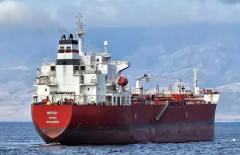
Participants at the conference said the measure pushes more of Russia's oil trade to the "shadow fleet" - a fleet of mostly older tankers operating outside the Western sphere of influence.
Conclusions
- In light of Russia's continued export of discounted oil to Asia, three paths can be envisioned for the future of Middle Eastern oil. The first is a status quo, where India and China continue to buy Russian crude at low prices without facing direct sanctions, putting Gulf producers under price pressure and forcing them to offer additional discounts or seek alternative markets in Europe and elsewhere.
- The second path is the escalation of Russian competition by flooding Asian markets with more volumes at lower prices, which could spark a "price war" that would hurt Middle Eastern revenues and put their budgets under severe pressure, which could push Gulf producers to rely on OPEC+ coordination or resort to diversifying their exports towards higher value-added products.
- In the third track, we may see a more coordinated response from Middle Eastern countries through joint production policies and trade alliances with India and Asian countries, not based solely on price but on long-term partnerships that include investment in infrastructure and security of supply, which may help restore the balance and reduce Asia's dependence on Russian oil, even if this requires financial and political concessions in the short term.


comments