The full extent of the impact of the 50 percent tariffs imposed by the United States on Indian exports is hard to determine, but early indications are that the fallout will be heavy for the Indian economy and its relations with Washington.
The US justified the move by the trade deficit in India's favor, high tariff barriers, and New Delhi's continued import of Russian oil. The measures covered more than two-thirds of Indian exports to the US market, with additional duties imposed on the services sector through a $100,000 fee on H1B work visas, on which Indian talent relies heavily.
Initial estimates indicate that the most vulnerable industries are those that are labor-intensive, such as textiles and jewelry, where sales are expected to drop by as much as 70-90% within a year.
Smartphone exports to the US in August fell to less than $1 billion from $2 billion in June, even though the category was not officially included in the list of additional duties. The decline reflects the fragility of India's trade surplus of about $41 billion and shows that US pressure is starting to take its toll before the full official data is released.
At the political level, these actions have created confusion within the Indian leadership. While US President Donald Trump repeatedly talks about his "personal relationship" with Prime Minister Narendra Modi, he does not hesitate to accuse New Delhi of supporting Moscow through its discounted oil purchases and portrays himself as having a role in managing its regional crises with Pakistan. This discrepancy in rhetoric has weakened Modi's image at home and opened the door for the opposition to question his ability to protect India's position vis-à-vis the major powers.
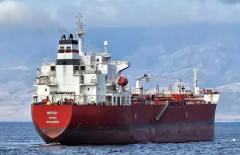
On the energy file, Washington sees New Delhi's continued purchase of Russian oil at preferential prices as direct support for Moscow, while India considers this decision to be part of its sovereignty in managing its energy security. Despite a relative decrease in imports since the imposition of European sanctions, major refineries such as Reliance and Nayara still rely heavily on Russian crude, amid increasing difficulties in transportation and insurance due to Western restrictions. Recent US decisions have contributed to raising the cost of shipping, as the Adani Group has stopped using sanctioned vessels, which has led some refineries to look for more expensive alternatives.
Geopolitically, India faces a complex equation. On the one hand, it is strengthening its cooperation with Russia and China within the framework of the Shanghai Cooperation Organization and joint exercises, while on the other hand, its border disputes with Beijing have been renewed since the Himalayan events, with the territorial dispute in the northeast continuing. While its trade deficit with China has surpassed $100 billion and its trade deficit with Russia is close to $60 billion, the United States remains the most important market for Indian exports, giving it a leverage that is difficult for New Delhi to break.
India is at a crossroads: It does not want to compromise its energy independence and its relationship with Moscow, but at the same time it realizes that the loss of the US market could be devastating. This dilemma puts the Modi government under mounting pressure between Washington on the one hand and Beijing and Moscow on the other, at a delicate moment that could reshape India's position in the international system.
Conclusions
The US trade escalation against India is not read in its bilateral context, but is part of a broader US trend to use tariffs and sanctions as political tools to reshape its relations with emerging powers. This trend makes it difficult for emerging economies to reconcile their trade interests with their sovereign independence.
India's experience shows that countries linked to Russian oil are coming under increasing pressure, whether through direct tariffs or through unconventional means such as raising transportation and insurance costs or imposing additional restrictions on non-oil sectors. This reflects that geopolitical competition is no longer confined to politics and security, but rather the economy has become a key arena of conflict.
Regionally, these developments are likely to affect energy markets in the Middle East, especially for Gulf and Iraqi oil. If Russia's share of the Asian market shrinks under pressure, there could be new opportunities for Iraqi oil to expand. Conversely, any disruptions in global trade or tighter U.S. restrictions could add uncertainty to the region's energy revenues, leaving the future open between growth potential and heightened risks.





comments