As negotiations between Russia and Ukraine gain momentum, global energy markets are reassessing supply expectations, raising concerns among oil-dependent economies, such as Iraq, about the financial impact of lower prices.
And for Baghdad, the impact is not simple. Analysts point to short-term risks from oversupply and falling prices, along with a medium-term scenario in which improved global growth could lift demand and ease pressures. The interaction of these two factors will determine the contours of Iraq's financial horizon.
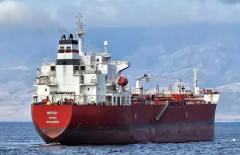
And markets have reacted cautiously to the prospect of a settlement, with expectations that sanctions relief could allow Russia to quickly increase its exports and add millions of barrels a day to global supplies. And Reuters reported that Russia has significant excess export capacity that could quickly return if restrictions are eased, reinforcing fears of oversupply.
And oil prices have already begun to fall. Brent crude, which traded above $80 per barrel in September 2024, fell below $60 by December 2025, amid weak demand growth and high supply expectations.
And Iraq's sensitivity to this situation is exacerbated according to Article IV consultations of the International Monetary Fund in April 2025, which estimated that Iraq needs oil prices exceeding $92 per barrel to balance the 2025 budget. According to the World Bank, oil constitutes more than 85% of government revenues, while official Iraqi data show that the percentage may reach 95% in some years, while oil represents more than 99% of exports.
By comparison, oil-producing Gulf countries such as Saudi Arabia and the UAE have succeeded in reducing their dependence on oil to about 40-65% of the state's income, by diversifying sources of revenue in industry, services, and sovereign investment returns, which provided them with financial margins that Iraq greatly lacks.
And stagnant spending is exacerbating the risks, with Iraqi data showing that 4.55 million public sector employees, 2.6 million retirees, and 2.15 million welfare recipients receive more than 8.5 trillion dinars ($6.5 billion) a month in fixed payments, severely limiting the government’s ability to absorb revenue shocks.
Economist and financial expert Hilal al-Taan said oil prices are influenced by a complex mix of global growth, geopolitics and market sentiment, not just by peace. But he warned that Iraq's heavy reliance on oil was amplifying the effects of any downturn.
And added the Taan: "Iraq is already facing a financial crisis, and any further decline in oil prices will exacerbate its effects," warning that Baghdad may push towards internal and external borrowing, which he described as "the dangerous stage of an economy exhausted by repeated financial shocks."
Oil expert Hamza al-Jawahiri said the peace agreement is likely to deepen oversupply pressures. And Russia is already exporting its oil despite sanctions, and it can quickly lift the volumes if restrictions are eased. And an increase in U.S. shale oil production could raise supply further, pushing prices to $50 a barrel or less.
However, Iraq cannot easily compensate for the decline in prices by increasing exports, as its production is still limited by OPEC+ quotas, which limits its ability to raise production even in periods of declining revenues, a constraint that OPEC market reports have repeatedly pointed to.
And economist Mohammed al-Hassani warned that the ceasefire could put pressure on prices and reduce investment spending, citing Iraq's experience during the collapse of oil prices in the COVID-19 pandemic, when prices briefly fell to $14 a barrel, forcing the government to borrow heavily to cover operational expenses.
"Despite the collapse, salaries have not been cut," said al-Hassani, noting that borrowing could again become the main option if prices fall, adding long-term financial risks.
And not all ratings are pessimistic. Mazhar Mohammed Saleh, the prime minister's financial adviser, suggested that peace could eventually prop up oil prices by spurring global growth.
"Peace belongs to the political economy of growth," Saleh said. And if global growth rises by 1%, oil demand typically rises by about 0.7%.”
He explained that increased demand may absorb additional supplies over time, challenging the assumption that a settlement would automatically hurt oil exporters.
And in this context, Iraq began preparing the federal budget for 2026 on the basis of a conservative oil price of $60 per barrel, with the aim of curbing spending and protecting basic obligations.
And following a meeting on December 15, 2025 chaired by Prime Minister Mohammed Shiaa al-Sudani, the Ministerial Council for the Economy approved measures to reduce spending and increase revenues, including reducing the allocations of the three presidencies and reducing official travel expenses.
And Saleh pointed out that these steps are not enough on their own, stressing that avoiding recurring salary crises "requires structural reform, including diversifying revenues and improving spending efficiency, which are goals contained in the government program approved by parliament in October 2022."
And the fragility of Iraq remains at its peak in the short term, as any decline in prices as a result of increasing supply will lead to immediate pressure on the budget. Medium-term results depend on whether global growth accelerates enough to lift energy demand. And yet, without economic diversification, Iraq will remain vulnerable to structural risks regardless of how the Russian-Ukrainian conflict ends.




comments